JOURNAL OF A COMPULSIVE READER
By Charles Matthews
Showing posts with label D.H. Lawrence. Show all posts

Saturday, May 28, 2011

42. The Modern Tradition, edited by Richard Ellmann and Charles Feidelson Jr., pp. 913-932

Faith: Poetized Religion (Matthew Arnold, George Santayana); Paganized Christianity (D.H. Lawrence, André Gide); Orthodoxy (Paul Claudel)
_____


Matthew Arnold: The Finer Spirit of Knowledge 


It was an inevitability that with all the challenges to traditional faith, some would come around to the idea that religion, and particularly Christianity, is a product of the imagination just like poetry -- and in fact that the Bible is a great poem with symbolic import if not factual content. 


I studied Matthew Arnold, whose 1888 "The Study of Poetry" and 1885 "Literature and Science" are excerpted here, in a "Tennyson, Browning, and Arnold" course in graduate school. Of the three, Tennyson was the most skilled poet, Arnold the most philosophical. And philosophy doesn't usually make for great poetry, as the fact that Arnold's "Dover Beach" is the only one of his poems that still attracts many readers demonstrates. It's a poem about the anxiety brought on by the loss of traditional faith, which Arnold also tackles here: 
Our religion has materialised itself in the fact, in the supposed fact; it has attached its emotion to the fact, and now the fact is failing it. But for poetry the idea is everything; the rest is a world of illusion, of divine illusion. 
So the solution, given the failure of the factual content of religion, is to treat its emotional content the way we treat that of poetry. "More and more mankind will discover that we have to turn to poetry to interpret life for us, to console us, to sustain us. Without poetry, our science will appear incomplete; and most of what now passes with us for religion and philosophy will be replaced by poetry." 
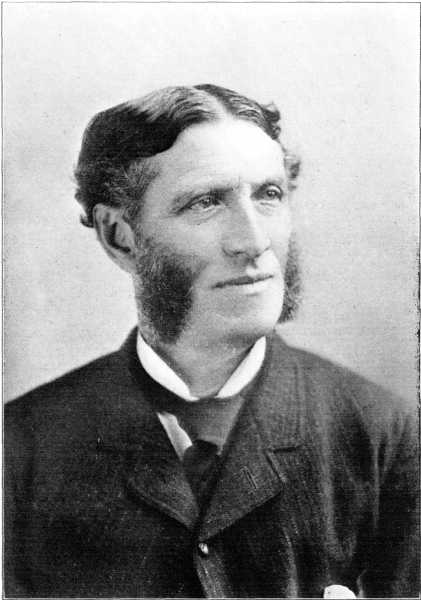

Matthew Arnold, date unknown
Not that we read much poetry anymore, but I think Arnold would have to include all artistic products of the imagination. Even the least literate of us today lead lives influenced by pop music and TV shows, which is one reason not to be snobbish and to keep aware of what interpretations of life, consolations and sustenance -- to use the Arnoldian terms -- they provide our fellow humans. 


Arnold looks back to the Age of Faith with some nostalgia: "The mediæval Universities came into being, because the supposed knowledge, delivered by Scripture and the Church, so deeply engages men's hearts, by so simply, easily, and powerfully relating itself to their desire for conduct, their desire for beauty.... The Middle Age could do without humane letters, as it could do without the study of nature, because its supposed knowledge was made to engage its emotions so powerfully." But because of the rise of science, and its challenge to religion, "humane letters," i.e., secular literature, takes a greater role, thanks to its "undeniable power of engaging the emotions." This makes it a partner "to the success of modern science in extirpating what it calls mediæval thinking." 
_____

George Santayana, date unknown
George Santayana: An Allegory of Human Life


Santayana's "The Poetry of Christian Dogma" (1900) follows Arnold's lead in affirming the role of imaginative creation in finding the way to spiritual truth. St. Paul created "a new poetry, a new ideal, a new God," basing it on "the real experience of humanity." It "was a fable," but "who stopped to question whether its elements were historical, if only its meaning were profound and its inspiration contagious?" Pauline Christianity was "a system complete and consistent within itself." It offered humankind "another world, almost as vast and solid as the real one, in which the soul may develop."
The world of the Christian imagination was eminently a field for moral experience; moral ideas were there objectified into supernatural forces, and instead of being obscured as in the real world by irrational accidents formed an intelligible cosmos, vast, massive, and steadfast.
Christianity transcended the demands for empirical verification by virtue of the fact "that all its parts had some significance and poetic truth." Moreover, it triumphed because "its scheme was historical.... It presented a story, not a cosmology. It was an epic in which there was, of course, superhuman machinery, but of which the subject was man, and, notable circumstance, the Hero was a man as well." 


Does it matter that it was "just" poetry, that it gave us a false picture of the universe with humankind at its center? Santayana suggests "that what is false in the science of facts may be true in the science of values." (See I.A. Richards on "pseudo-statements."
While the existence of things must be understood by referring them to their causes, which are mechanical, their functions can only be explained by what is interesting in their results, in other words, by their relation to human nature and to human happiness.
Santayana is setting forth the view, essential to existentialism, that we can see things only in human terms. The human center of Christianity, the view of humanity in history, was key to its success over religions such as that of the Greeks and Romans, which saw humankind only as playthings of the superhuman. But Christianity remained a human imaginative construct: 
The idea of Christ himself had to be constructed by the imagination in response to moral demands, tradition giving only the barest external points of attachment. The facts sere nothing until they became symbols; and nothing could turn them into symbols except an eager imagination on the watch for all that might embody its dreams.
That a god might take human form and die, as Christ did, is "a figure and premonition of the burden of [human] experience." Paul and the Apostles transformed the fact of Jesus's death into "a religious inspiration. The whole of Christian doctrine is thus religious and efficacious only when it becomes poetry, because only then is it the felt counterpart of personal experience and a genuine expansion of human life." 


Coda: Wallace Stevens wrote beautifully about Santayana and the transforming imagination in the poem "To an Old Philosopher in Rome."
_____


D.H. Lawrence: The Resurrection of the Body 


Lawrence's "The Risen Lord" (1929) follows Santayana in suggesting that the human element is the most powerful force in the story of Christ: "What we have to remember is that the great religious images are only images of our own experiences, or of our own state of mind and soul." But Lawrence pinpoints the changing attitudes toward the story in the experience of World War I, and not in the assaults on the story by the Enlightenment or the Higher Criticism. The wartime experience, or at least the male wartime experience, dethroned the Virgin Mary: "For the man who went through the war the resultant image inevitably was Christ Crucified. And Christ Crucified is essentially womanless." 


The problem is, Lawrence says, that the churches don't realize that things have changed: "instead of preaching the Risen Lord, [the churches] go on preaching the Christ-Child and Christ Crucified." And although the men who fought the war recognize the pain and suffering of Christ Crucified, the young, those who did not fight the war, are left with no viable images of Christ. 
Now man cannot live without some vision of himself. But still less can he live with a vision that is not true to his inner experience and inner feeling. And the vision of Christ-Child and Christ Crucified are both untrue to the inner experience and feeling of the young. 
Lawrence insists that for the sake of the young, who find no vision of themselves in the imagery of the church, it should "take the great step onwards, and preach Christ Risen." Lawrence's Christ Risen is Christ in the flesh: "He rises with hands and feet, as Thomas knew for certain: and if with hands and feet, then with lips and stomach and genitals of a man. Christ risen, and risen in the whole of His flesh, not with some left out." 


The traditional risen Christ, "floated up into heaven as flesh-and-blood," is false to human experience. The rest of the Christ-story, "The virgin birth, the baptism, the temptation, the teaching, Gethsemane, the betrayal, the crucifixion, the burial and the resurrection, these are all true according to our inward experience." But this bodily ascension doesn't ring true: "Flesh and blood belong to the earth, and only to the earth. We know it." 


So instead Lawrence posits a Jesus who remained on earth "in full flesh and soul," who married and had children. "And if He remembered his first life, it would neither be teaching nor preaching, but probably carpentering again, with joy, among the shavings." He would take on the "Roman judges and Jewish priests and money-makers of every sort," and tell them, "I am going to destroy all your values, Mammon, all your money values and conceit values, I am going to destroy them all." He would take on "that which is anti-life, Mammon, like you, and money, and machines, and prostitution, and all that tangled mass of self-importance and greediness and self-conscious conceit which adds up to Mammon." 
_____


André Gide: Salvation on Earth 


In the excerpts here from his Journals for 1937 and 1916-19, Gide reflects on the ways in which he differs from Nietzsche's attacks on Christianity. Nietzsche "resolutely misunderstands Christ," Gide asserts, and misses the "emancipatory power" of his teachings. Gide thinks Nietzsche mistakes the Church for Christ, and argues that the Church, "by annexing, by trying (in vain moreover) to assimilate Christ, instead of assimilating herself to Him, ... cripples Him more -- and it is this crippled Christ that Nietzsche is fighting." 


In his own reading of the Gospels, Gide finds "that it is not so much a question of believing in the words of Christ because Christ is the Son of God as of understanding that he is the Son of God because his word is divine and infinitely above everything that the art of wisdom and man offer us." 


It is "the æsthetic truth of the Gospels" to which Gide responds. And because of this he rejects the idea of a blissful afterlife: "It is right now and immediately that we can share in felicity.... One of the gravest misunderstandings of the spirit of Christ comes from the confusion frequently established in the Christian's mind between future life and eternal life." To be born again, Gide argues, is to recognize joy in this life: "Whoever waits for that hour beyond death waits for it in vain. From the very hour at which you are born again, from the very moment at which you drink of this water, you enter the Kingdom of God, you share in eternal life."  
_____


Paul Claudel: The Errors of André Gide 
Paul Claudel in 1927


Catholic and ultraconservative, Claudel was bound to differ with Gide's imaginative reinterpretation of Christianity, as he does in this letter to Gide from 1905. In particular he rejects the view of religion as poetry: "As for what people call 'Art' and 'Beauty,' I had rather that they perished a thousand times over than that we should prefer such creatures to their Creator and the futile construction of our imagination to the reality in which alone we may find delight." Claudel's "reality" is orthodox Christianity. 


He also rejects Gide's embrace of nature, which Claudel sees as fallen: "it is in this alone that sanctity consists -- in a filial submission of our will to the Will of our heavenly father. How then can you speak of a pagan sanctity, -- that is to say, of an execrable pride, of the spiritual gormandizing of a creation that has turned in upon itself and revels in its strength and beauty, as if it were itself responsible for their creation?" Paganism is manifested in the decadence of ancient Rome, over which Christianity triumphed. Christianity enjoins "the duties of charity and the duties of justice." And it rejects the power of the wealthy, who on judgment day will be asked, "What have they done with the rare and exceptional gifts which were accorded to them? Were these simply given that they could have a more amusing time? or become artists and dilettantes?" 


As for poets and writers like Gide and Claudel: 
The mere fact of our enlightenment makes us spread light all about us. We are delegated by the rest of the world to the way of knowledge and truth, and there is no other truth but Christ, who is the Way and the Life, and the duty of knowing and serving Him lies more heavily on us than upon others, and lies upon us with a terrible urgency.

Wednesday, May 18, 2011

32. The Modern Tradition, edited by Richard Ellmann and Charles Feidelson Jr., pp. 699-723

Self-Consciousness: Self-Realization (André Gide, D.H. Lawrence, Rainer Maria Rilke, Wassily Kandinsky); The Field of Consciousness (Henry James, William James)
_____
André Gide: The Value of Inconstancy


In these excerpts from Later Fruits of the Earth (1935) and his journals for 1923, Gide embraces the fluidity of the personality as a form of liberation, looking back in particular to the repressiveness of his strict upbringing. "I feel that what is diverse in me is still myself," he asserts, rejecting the ancient command to "know thyself." In his experience, "only rather poor and limited personalities succeeded in finding and understanding themselves." He chooses instead "the perpetual and elusive process of becoming." 


In his childhood, he recalls, "My parents had accustomed me to act, not according to my inner urge, but according to an ethical rule outside of me, which they considered applicable to all men.... Not to have acted, in whatever combination of circumstances, precisely as I was expected to act seemed to me abominable to such a point that all inner peace was immediately compromised, that peace without which I believed that I could not live." Following the rule seemed to them true freedom, while not following it made one "a slave to his passions." As a result, "they have an illusion of acting freely while already their choice has ceased to be free."


But liberating himself from "the rigorous puritan upbringing by which my parents had fashioned my childhood" brought about a recognition that he had achieved a kind of sincerity that replaced the hypocrisy of rule-following: "I never seemed more moral to myself than at the time when I had decided to cease being moral; I mean: to be moral henceforth only in my own way."
Henceforth, acting in any way whatever and not giving myself time to reflect, my least acts seemed to me more significant since they were no longer reasoned out. At the same time I delivered myself from anxiety, perplexity, and remorse.
Finding a historical pretext for the instinctual life, he observes that "The Greeks ... recognized as many gods as there are instinct, and the problem for them was to keep the inner Olympus in equilibrium, not to subjugate and subdue any of the gods." And he observes that for the people "I consider among the best tempered, happiness lies not in comfort and quietude, but in ardor. A sort of magnificent using up is all the more desirable to them since they are constantly being renewed by it and do not so much suffer from the wearing away as they rejoice in their perpetual re-creation." 


This leads him to the assertion that, as this life is all we are given -- he rejects the idea of immortality -- we might as well make the most of it, accepting "that almost perfect satisfaction I enjoy in effort itself and in the immediate realization of happiness and harmony." He turns Christ's command, "Sell all your goods and give them to the poor," into an injunction to liberate himself from moral conformity: "I began then to seek out which, among the thoughts, opinions, and tendencies of my soul and mind that were most familiar to me, were the ones that I most certainly derived from my ancestors, from my upbringing and puritan formation," and to get rid of them. "I soon felt my soul only as a loving will ..., palpitating, open to all comers, like unto everything, impersonal, a naïve confusion of appetites, greeds, desires." 


But once again he finds the words of Christ applicable to his situation: "Why should you be troubled?" 
I surrendered then to this provisional disorder, trusting in a more sincere and natural order that would organize itself, I thought, and believing moreover that the disorder itself was less dangerous for my soul than an arbitrary and necessarily artificial order, since I had not invented it.
He also rejects what he sees as the spiritual pride of the puritan: "Considering ... that nothing separates one more from God than pride and that nothing made me prouder than my virtue, I began to detest that very virtue and everything on which I could pride myself, everything that allowed me to say: I am not like you, common run of men!" By standing puritan-Christian morality on its head, he found his way, or the freedom of lacking a way: "Every step I took forward was a venture into the unknown." 


D.H. Lawrence: The Living Self 


Like Gide, Lawrence finds an affirmation of this life, rather than a narrow moral path leading to the next one, provides true liberation of the spirit. And in the essay "Why the Novel Matters" (1936) he proclaims the novel to be the true holy writ. 


He begins with a rejection of the mind-body dualism: "We think of ourselves as a body with a spirit in it, or a body with a soul in it, or a body with a mind in it," but argues that "the tin can business, or vessel of clay, is just bunk. And that's what you learn, when you're a novelist. And that's what you are very liable not to know, if you're a parson, or a philosopher, or a scientist, or a stupid person." The body is what matters. 
Every man, philosopher included, ends in his own finger-tips. That's the end of man alive. As for the words and thoughts and sighs and aspirations that fly from him, they are so many tremulations in the ether, and not alive at all. But if the tremulations reach another man alive, he may receive them into his life, and his life may take on a new colour, like a chameleon creeping from a brown rock on to a green leaf.
"Only connect," urged E.M. Forster, and art is a medium for connecting one human being to another, via Lawrence's "tremulations in the ether." 


"Nothing is important but life," Lawrence proclaims. And the artist is the true affirmer of life. "The philosopher, on the other hand, because he can think, decides that nothing but thoughts matter. It is as if a rabbit, because he can make little pills, should decide that nothing but little pills matter." The scientist, he says, works on inert things: "he has absolutely no use for me so long as I am man alive." 
Now I absolutely flatly deny that I am a soul, or a body, or a mind, or an intelligence, or a brain, or a nervous system, or a bunch of glands, or any of the rest of these bits of me. The whole is greater than the parts.
Earlier in the anthology, Lawrence had rejected the notion that the sun was "a sphere of blazing gas" as a reductionist view of science. It is the novelist, he says, who gets the point, who sees things as a whole. "And being a novelist, I consider myself superior to the saint, the scientist, the philosopher, and the poet, who are all great masters of different bits of man alive, but never get the whole hog." Novels, too, "are only tremulations on the ether. But the novel as a tremulation can make the whole man alive tremble. Which is more than poetry, philosophy, science, or any other book-tremulation can do." 


Lawrence naturally has a broad view of what a novel is: He includes the Bible ("but all the Bible"), Homer and Shakespeare as "the supreme old novels," because "They set the whole tree trembling with a new access of life, they do not just stimulate growth in one direction." Like Gide, Lawrence values process, becoming: "All things flow and change, and even change is not absolute. The whole is a strange assembly of apparently incongruous parts, slipping past one another." He acknowledges that the individual maintains a kind of integrity, but that it's impossible to isolate: "It is useless to talk about my ego. That only means that I have made up an idea of myself, and that I am trying to cut myself out to pattern." 


The peculiar value of the novel is that its "characters can do nothing but live. If they keep on being good, according to pattern, or bad, according to pattern, or even volatile, according to pattern, they cease to live, and the novel falls dead." This is the great function of the novel, to demonstrate the difference between being alive and being dead. "To be alive, to be man alive, to be whole man alive: that is the point," and "in the novel you can see, plainly, when the man goes dead, the woman goes inert. You can develop an instinct for life, if you will, instead of a theory of right and wrong, good and bad." For "only in the novel are all things given full play, or at least, they may be given full play, when we realize that life itself, and not inert safety, is the reason for living." 


Rainer Maria Rilke: The Self and Reality 


Rilke's letter to "L.H.," written in 1915 -- a time of war -- expresses the difficult relationship between an individual and a cosmos that increasingly seems severely alien. In fact, Rilke expresses "astonishment over the fact that men have for thousands of years [dealt] with life (not to mention God)" and yet "remain such helpless novices, so between fright and subterfuge, so miserable." He refers to "God and gods" as a shorthand for the undying sense that humans are dwarfed by their environment. 
Who knows, I ask myself, whether we do not always approach the gods so to speak from behind, separated from their sublimely radiant face through nothing but themselves, quite near to the expression we yearn for, only just standing behind it -- but what does that mean save that our countenance and the divine face are looking out in the same direction, are at one; and this being so, how are we to approach the god from the space that lies in front of him?
Humankind may, in fact, be confronting the same dilemma as the gods -- so rather than a separation, perhaps there is a harmony of purpose between us and ... whatever you want to call it. 
Let us agree that since his earliest beginnings man has shaped gods in whom here and there were contained only the dead and threatening and destructive and frightful, violence, anger, superpersonal stupor, tied up as it were into a tight knot of malice: the alien, if you like, but, already to some extent implied in this alien, the admission that one was aware of it, endured it, yes, acknowledged it for a sure, secret, relationship and connection.
Instead, why not recognize the gods as a projection of humanity, "a part ... of the human mind" and that this "tension" between the individual and the universe is self-defeating, a tension against oneself? Like God, death is not external, not the "other." To treat them as outside oneself is a mistake. 
Nature knew nothing of this removal we had somehow accomplished -- if a tree blossoms, death blossoms in it as well as life, and the field is full of death, which from its reclining face sends out a rich expression of life, and the beasts go patiently from one [to the] other -- and everywhere about us death is still at home and he watches us out of the cracks in things, and a rusty nail, sticking up somewhere out of a plank, does nothing day and night but rejoice over death.
By accepting that the universe is not alien, that in the midst of life we are in death, we liberate ourselves.  


Wassily Kandinsky: An Expressionist Credo 
Wassily Kandinsky, Composition VII, 1913


Wassily Kandinsky, c. 1913? 
Kandinsky's 1913 Concerning the Spiritual in Art is one of the intellectual documents of Expressionism, proclaiming the necessity of the subjective element in painting and the other arts. 
The artist is not only justified in using, but is under a moral obligation to use, only those forms which fulfill his own need. Absolute freedom from anatomy or anything else of the kind must be given to the artist in his choice of means. Such spiritual freedom is as necessary in art as it is in life.
As such, art's function is "the development and refinement of the human soul," and a reaction against not only materialism but also the doctrine of "art for art's sake." The center of the credo is Kandinsky's proclamation: "The artist must have something to communicate, since mastery over form is not the end but, instead, the adapting of form to internal significance." For Kandinsky, "communicating" certainly does not mean slavishly reproducing external objects, but baring the contents of his soul. Art is a kind of priesthood in which  "the artist has a triple responsibility: 

  1. he must return the talent which he has; 
  2. his actions, feelings and thoughts, like those of every man, create a spiritual atmosphere which is either pure or infected;
  3. his actions and thoughts are the material for his creations, which in turn influence the spiritual atmosphere."

Beauty, in short, "is produced by internal necessity, which springs from the soul."
Wassily Kandinsky, Composition X, 1939


Henry James: Centers of Consciousness 


The preface to The Princess Cassamassima (1908) is late James, which means dense and mannered prose, entwining itself around a topic without clinging to it. In essence, what James is arguing here is that the novel needs a central consciousness expressed through a character who is neither a fool nor someone so intelligent that his awareness prevents him from being detached from the action in which he takes part. 
We care, our curiosity and sympathy care, comparatively little for what happens to the stupid, the coarse and the blind; care for it, and for the effects of it, at the most as helping to precipitate what happens to the more deeply wondering, to the really sentient. Hamlet and Lear are surrounded, amid their complications, by the stupid and the blind, who minister in all sorts of ways to their recorded fate.
It is Hamlet and Lear, of course, whom we care about. Not Regan and Goneril or -- unless one is Tom Stoppard -- Rosencrantz and Guildenstern. On the other hand, "no 'story' is possible without its fools -- as most of the fine painters of life, Shakespeare, Cervantes and Balzac, Fielding, Scott, Thackeray, Dickens, George Meredith, George Eliot, Jane Austen, have abundantly felt." But they knew that to put the fool at the forefront, to have the narrative point of view that of the fool is to put it "within the scope of a denser and duller, a more vulgar and more shallow capacity," resulting in "a picture dim and meagre." They know to place "a mind of some sort -- in the sense of a reflecting and colouring medium -- in possession of the general adventure." 


When Scott fails to do so, in The Bride of Lammermoor, the novel fails: "Edgar of Ravenswood ... has a black cloak and a hat and feathers more than he has a mind," whereas Hamlet, "while equally sabled and draped and plumed, while at least equally romantic, has yet a mind still more than he has a costume." In Tom Jones, Fielding falls somewhere in between: Tom "hasn't a grain of imagination," but the novel succeeds because "his sense of bewilderment obtains altogether on the comic, never on the tragic plane." Moreover, he has an author, "handsomely possessed of a mind" so "that we see him through the mellow air of Fielding's fine old moralism, fine old humour and fine old style, which somehow really enlarge, make every one and every thing important." 


The trick is to find the novel's center of consciousness in a character who "may feel enough and 'know' enough -- or be in the way of learning enough -- for his maximum dramatic value, without feeling and knowing too much for his minimum verisimilitude, his proper fusion with the fable." George Eliot presents her characters' "emotions, their stirred intelligence, their moral consciousness," which become "our own very adventure." 


William James: The Stream of Consciousness


Henry's brother William is an expert on consciousness, as these excerpts from The Principles of Psychology (1890) demonstrate. It's a difficult thing to be an expert in: "No one every had a simple sensation by itself. Consciousness, from our natal day is a teeming multiplicity of objects and relations, and what we call simple sensations are results of discriminative attention, pushed often to a very high degree." We think, therefore we are, but more importantly, we are always thinking, and not in discrete little packets of thought. And even if we can isolate a thought, or an idea, we find that it mutates over time: "Often we are ourselves struck at the strange differences in our successive view of the same thing."
A permanently existing "idea" or "Vorstellung" which makes its appearance before the footlights of consciousness at periodical intervals, is as mythological an entity as the Jack of Spades.
Thought is continuous. "I have already said that the breach from one mind to another is perhaps the greatest breach in nature," but there is no breach within the individual mind. Consciousness may be interrupted -- by sleep, by anesthesia, by trauma -- but "within each personal consciousness thought feels continuous. Even after an interruption, "the consciousness after it feels as if it belonged together with the consciousness before it, as another part of the same self." We don't -- except perhaps in exceptional, pathological cases -- awake from an interruption of consciousness feeling as if we are not the same person. And "the changes from one moment to another in the quality of the consciousness are never absolutely abrupt." If there are gaps, somehow we span them. 
To expect the consciousness to feel the interruptions of its objective continuity as gaps, would be like expecting the eye to feel a gap of silence because it does not hear, or the ear to feel a gap of darkness because it does not see.
The "common whole" that bridges the gaps "is myself, I, or me." Consequently, "In talking of it hereafter, let us call it the stream of thought, of consciousness, or of subjective life."


Even violent irruptions into the stream are nevertheless part of it. "Into the awareness of the thunder itself the awareness of the previous silence creeps and continues; for what we hear when the thunder crashes is not thunder pure, but thunder-breaking-upon-silence-and-contrasting-with-it." Context is everything. "Our own bodily position, attitude, condition, is one of the things of which some awareness, however inattentive, invariably accompanies the knowledge of whatever else we know." 


But although the stream of consciousness flows steadily, we don't perceive it that way. "Like a bird's life, it seems to be made of an alternation of flights and perchings." The parts of it where it seems to perch, James calls the "substantive parts"; the flights are the "transitive parts." But it is difficult to examine the transitive parts because of what Heisenberg would later call the uncertainty principle: 
As a snowflake crystal caught in the warm hand is no longer a crystal but a drop, so, instead of catching the feeling of relation moving to its term, we find we have caught some substantive thing, usually the last word we were pronouncing, statically taken, and with its function, tendency, and particular meaning in the sentence quite evaporated. The attempt at introspective analysis in these cases is in fact like seizing a spinning top to catch its motion, or trying to turn up the gas [i.e., switch on the lights] quickly enough to see how the darkness looks. 
Or trying to measure the position and the velocity of an atomic particle simultaneously. 


The consciousness has its own grammar and syntax: "We ought to say a felling of and, a feeling of if, a feeling of but, and a feeling of by, quite as readily as we say a feeling of blue or a feeling of cold. Yet we do not: so inveterate has our habit become of recognizing the existence of the substantive parts alone, that language almost refuses to lend itself to any other use."


Yet that every datum in our remembered experience has its own context ought to be obvious when we try to remember a name that's on the tip of our tongue. If someone suggests another name, we know it's not the right one. There is a gap there that only one name will fill, just as only one piece of the jigsaw puzzle fits the gap in the picture: "A sort of wraith of the name is in it, beckoning us in a given direction, making us at moments tingle with the senses of our closeness, and then letting us sink back without the longed-for term." 


In our use of language, "large tracts ... are nothing but signs of direction in thought, of which direction we nevertheless have an acutely discriminative sense." We have "rapid premonitory perspective view of schemes of thought not yet articulate," so that we can read aloud a passage that we've never seen before and anticipate the words we should emphasize and the direction that the sentence is taking. 
And this foreboding of the coming grammatical scheme combined with each successive uttered word is so practically accurate that a reader incapable of understanding four ideas of the book he is reading aloud, can nevertheless read it with the most delicately modulated expression of intelligence.
So although consciousness may seem to be made up of discrete bits of perception, a "halo or penumbra ... surrounds" them and "escorts" them through the stream.  

Friday, May 13, 2011

27. The Modern Tradition, edited by Richard Ellmann and Charles Feidelson Jr., pp. 581-613

The Unconscious: The Freudian Unconscious (Sigmund Freud, Thomas Mann); Liberation of the Unconscious (D.H. Lawrence, Tristan Tzara, André Breton)
_____

Sigmund Freud: The Origins of Culture


In Civilization and Its Discontents (1930), Freud extended his theories of the unconscious from the individual to civilization itself, not without stretching a point or a few. Asserting that "we cannot fail to be struck by the similarity between the process of civilization and the libidinal development of the individual," he finds that sublimation of instinct both gives rise to civilization -- "it is what makes it possible for higher psychical activities, scientific, artistic, or ideological, to play such an important part in civilized life" -- and makes civilized humans more neurotic.
It is impossible to overlook the extent to which civilization is built up upon a renunciation of instinct, how much it presupposes precisely the non-satisfaction (by suppression, repression or other means?) of powerful instincts. This "cultural frustration" dominates the large field of social relationships between human beings. As we already know, it is the cause of the hostility against which all civilizations have to struggle.
He posits that civilization arose because the constant "need for genital satisfaction" led to the cohabitation of males and females and thence to the family: “the male acquired a motive for keeping the female, or, speaking more generally, his sexual objects, near him; while the female, who did not want to be separated from her helpless young, was obliged, in their interests, to remain with the stronger male.” Greater combinations of peoples eventually followed all “in the service of Eros.” So civilization demonstrates “the struggle between Eros and Death, between the instinct of life and the instinct of destruction, as it works itself out in the human species.”


Of course, the community has to find ways of dealing with aggression, so it causes it to be redirected into the individual. “Civilization ... obtains mastery over the individual's dangerous desire for aggression by weakening and disarming it and by setting up an agency with him to watch over it, like a garrison in a conquered city.” It reinforces the superego and with it the sense of guilt.


And when Freud says guilt, he immediately thinks of the Oedipus complex. He posits that “the human sense of guilt goes back to the killing of the primal father, the remorse for which “was the result of the primordial ambivalence of feeling towards the father. His sons hated him, but they loved him, too.”
Now, I think, we can at last grasp two things perfectly clearly: the part played by love in the origin of conscience and the fatal inevitability of the sense of guilt. Whether one has killed one's father or has abstained from doing so is not really the decisive thing. One is bound to feel guilty in either case, for the sense of guilt is an expression of the conflict due to ambivalence, of the eternal struggle between Eros and the instinct of destruction or death.
It's the primordial Catch-22.


Civilization, then, can only thrive “through an ever-increasing reinforcement of the sense of guilt, which will perhaps reach heights that the individual finds hard to tolerate.... The price we pay for our advance in civilization is a loss of happiness through the heightening of the sense of guilt.”


Thomas Mann: The Significance of Freud

Thomas Mann in 1937
This address, “Freud and the Future,” was delivered in Vienna in 1936 on the occasion of Freud's eightieth birthday. It lauds him as “a great scientist,” which is not a characterization that everyone would agree with today, but more particularly because of Freud's influence on “the world of creative literature,” which is still undeniable.

Mann observes that Freud “did not know Nietzsche” or Novalis, Kierkegaard, or Schopenhauer, but that he seems to have intuited their ideas and given them practical application:
By his unaided effort, without knowledge of any previous intuitive achievement, he had methodically to follow out the line of his own researches; the driving force of his activity was probably increased by this very freedom from special advantage.
Freud's theories, Mann observes, have “penetrated into every field of science and every domain of the intellect: literature, the history of art, religion and prehistory; mythology, folklore, pedagogy, and what not.” The particular connection between psychoanalysis and literature that Mann observes “consists first in a love of truth, in a sense of truth, a sensitiveness and receptivity for truth's sweet and bitter, which largely expresses itself in a psychological excitation, a clarity of vision, to such an extent that the conception of truth actually almost coincides with that of psychological perception and recognition.”

But what Mann finds most congenial in Freud is “an understanding of disease, a certain affinity with it, outweighed by fundamental health, and an understanding of its productive significance.” For Mann is all about “disease as an instrument of knowledge,” as any reader of The Magic Mountain surely knows.

Mann is also struck by the coherence of Freud's work with the thought of Schopenhauer, who also “preached the primacy of the instinct over mind and reason,” though “not in the anti-human spirit of the mind-hostile doctrines of today” (i.e, Nazism). He notes that in the New Introductory Essays in Psychoanalysis, Freud “describes the soul-world of the unconscious, the id, in language as strong, and at the same time as coolly intellectual, objective, and professional a tone, as Schopenhauer might have ued to describe his sinister kingdom of the will.”

Again, Mann touches on the political horrors of his day in his discussion of the id, which “can take the upper hand with the ego, with a whole mass-ego, thanks to a moral devastation which is produced by the worship of the unconscious, the glorification of its dynamic as the only life-promoting force, the systematic glorification of the primitive and irrational. For the unconscious, the id, is primitive and irrational, is pure dynamic. It knows no values, no good or evil, no morality.” But he holds out hope “that the resolution of our great fear and our great hate, their conversion into a different relation to the unconscious ... may one day be due to the healing of this very science” -- i.e., psychoanalysis. “The free folk are the people of a future freed from fear and hate, and ripe for peace.”


D.H. Lawrence: A Non-Freudian Unconscious 

Freud had a dirty mind, Lawrence asserts in this excerpt from Psychoanalysis and the Unconscious (1921), so Lawrence sets out to discover "the pristine unconscious in man." Freud's unconscious "is the cellar in which the mind keeps its own bastard spawn. The true unconscious is the well-head, the fountain of real motivity." Bad stuff happens when you hook your passions to the ideal instead of listening to the unconscious: 
This motivizing of the passional sphere from the ideal is the final peril of human consciousness. It is the death of all spontaneous, creative life, and the substituting of the mechanical principle.
In Freud, Lawrence claims, idealism and materialism, supposed philosophical opposites, unite: "the ideal becomes a mechanical principle," a kind of ghost in the machine. By identifying love as sex, Lawrence thinks, Freud sanctions all of its manifestations as physical: "incest is the logical conclusion of our ideals, when these ideals have to be carried into passional effect. And idealism has no escape from logic."   

The "true unconscious," Lawrence asserts, "is the spontaneous life-motive in every organism." This life-motive begins "where the individual begins," at "the moment of conception." (Lawrence would almost certainly be a pro-lifer of some sort.)  
By the unconscious we wish to indicate that essential unique nature of every individual creature, which is, by its very nature, unanalysable, undefinable, inconceivable. It cannot be conceived, it can only be experienced, in every single instance. And being inconceivable, we will call it the unconscious. As a matter of fact soul would be a better word. By the unconscious we do mean the soul.
But not, he hastens to add, the soul as imagined by idealism, which has been reduced "that which a man conceives himself to be," so he returns to the word "unconscious."  

Lawrence's unconscious is not, unlike Freud's, susceptible to the reductionism of science, which would reduce the sun to "some theory of burning gases, some cause-and-effect nonsense." We apprehend the sun imaginatively, not scientifically: "And even if we do have a mental conception of the sun as a sphere of blazing gas -- which it certainly isn't -- we are just as far from knowing what blaze is. Knowledge is always a matter of whole experience, what St. Paul calls knowing in full, and never a matter of mental conception merely." 

Lawrence now goes off into his own psycho-physiological theories, which involve the solar plexus and the diaphragm and separate "planes" of the body. It's a personal myth that he compares to the concepts of the Greeks: "When the ancients located the first seat of consciousness in the heart, they were neither misguided nor playing with metaphor." What he is aiming at is a theory of unification. "The individual psyche divided against itself divides the world against itself, and an unthinkable process of calamity ensues unless there be a reconciliation."  


Tristan Tzara: Dadaism 

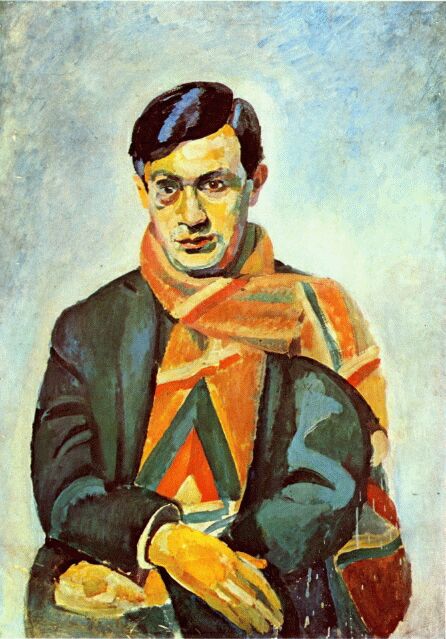
Robert Delaunay, Portrait of Tristan Tzara, 1923
Tzara's "Dada Manifesto" (1918) and "Lecture on Dada" (1922) rejects Freudian psychoanalysis as "a dangerous disease, it puts to sleep the anti-objective impulses of man and systematizes the bourgeoisie." This reaction against the normative is epitomized by Dada, which attacked what its proponents saw as the stultification of art. It aimed at liberation through mockery. If "everyone dances to his own boomboom," as Tzara proclaimed, then Dadaism was a way of freeing everyone from the lockstep of artistic conformity. "I am against systems," Tzara says, "the most acceptable system is on principle to have none at all." Dada would abolish logic, but have "absolute and unquestionable faith in every god that is the immediate product of spontaneity." 

Dada rejects "explanations": 
You explain to me why you exist. You haven't the faintest idea. You will say: I exist to make my children happy. But in your hearts you know that isn't so. You will say: I exist because God wills. That's a fairy tale for children. You will never be able to tell me why you exist but you will always be ready to maintain a serious attitude about life. You will never understand that life is a pun, for you will never be alone enough to reject hatred, judgments, all these things that require such an effort, in favor of a calm, level state of mind that makes everything equal and without importance.
And yes, Tzara recognizes that there is an element of Buddhist detachment to that attitude. 

Dadaism is anti-intellectual: "Intelligence is the triumph of sound education and pragmatism. Fortunately life is something else and its pleasures are innumerable." Dadaism sees itself as above all, life-affirming: "It is diversity that makes life interesting. There is no common basis in men's minds. The unconscious is inexhaustible and uncontrollable. Its force surpasses us." Moreover, art is inferior to life: "Art is not the most precious manifestation of life. Art has not the celestial and universal value that people like to attribute to it. Lie is far more interesting." 

Tzara rejects idealism:  
The Beautiful and True in art do not exist; what interests me is the intensity of a personality transposed directly, clearly into the work; the man and his vitality; the angle from which he regards the elements and in what manner he knows how to gather sensation, emotion, into a lacework of words and sentiments.
The origins of Dada are in disgust, Tzara says. Disgust with the useless explanations of metaphysics, the pretentiousness of artists, "the false prophets who are nothing but a front for the interests of money," and so on.  Dada is, in short, the first step toward postmodernism.


André Breton: Surrealism 

André Breton in 1924
Most often associated with Salvador Dalì, the great commercializer of surrealism, the movement has its intellectual roots in Breton's "Surrealist Manifesto," from which he quotes in these excerpts from What Is Surrealism? (1934). Breton had studied medicine and psychiatry, and during his reading of Freud had experimented with "automatic writing" as a means of gaining access to the unconscious mind. Surrealism then became a kind of portal to what Breton calls "the superior reality of certain forms of association" manifested in "the omnipotence of the dream and in the disinterested play of thought." 

Breton claims to find surrealist elements in Dante and Shakespeare and lists a number of precursors and contemporaries, including Jonathan Swift ("surrealist in malice"), Charles Baudelaire ("surrealist in morals"), Lewis Carroll ("surrealist in nonsense"), Georges Seurat ("surrealist in design") and Pablo Picasso ("surrealist in cubism").  Surrealism is not subject "to processes of filtering"; instead, surrealists are "content to be silent receptacles of so many echoes, modest registering machines that are not hypnotized by the pattern that they trace," and therefore "we are perhaps serving a yet much noble cause." 

He gives Freud credit for awakening interest in and awareness of the processes of the unconscious, "an aspect of mental life -- to my belief by far the most important -- with which it was supposed that we no longer had any concern." Hence, "The imagination is perhaps on the point of reclaiming its rights." Freud's greatest achievement was that he gave scientific credibility and utility to the imaginative life and its reflection in art. 
The Manfesto of Surrealism has improved on the Rimbaud principle that the poet must turn seer. Man in general is going to be summoned to manifest through life those new sentiments which the gift of vision will so suddenly have placed within his reach.
Surrealism is a way of "securing expression in all its purity and force." It places surreality on the same plane as reality, "neither superior not exterior to it." 

Breton acknowledges that Dadaism, as enunciated by Tzara, "although claiming until 1930 no connection with surrealism, is in perfect accord with" it. Indeed, surrealism, as Breton sees it, can claim kin to "several thought-movements." But unlike Tzara, Breton has "social action" in mind: "we hold the liberation of man to be the sine qua non of the liberation of the mind, and we can expect this liberation of man to result only from the proletarian Revolution." Surrealism, he says, "undertakes particularly the critical investigation of the notions of reality and unreality, of reason and unreason, of reflection and fimpulse, of knowing and 'fatal' ignorance, of utility and uselessness" -- it is consequently, like "Historical Materialism,' dialectical in nature.
I really cannot see, pace a few muddle-headed revolutionaries, why we should abstain from taking up the problems of love, of dreaming, of madness, of art and of religion, so long as we consider these problems from the same angle as they, and we too, consider Revolution.
But the "muddle-headed revolutionaries" succeeded in kicking Breton out of the Communist Party. 

Breton is most sanguine about the influence of surrealism on literature:
The hordes of words which were literally unleashed and to which Dada and surrealism deliberately opened their doors, ... will penetrate, at leisure, but certainly, the idiotic little towns of that literature which is still taught and, easily failing to distinguish between low and lofty quarterings, they will capture a fine number of turrets.... There is a pretence that it has not been noticed how much the logical mechanism of the sentence is proving more and more impotent by itself to give man the emotive shock which really gives some value to his life.
Surrealism, Breton says, is the "excessively prehensile tail" of Romanticism. 


He's not uncritical of some of the published pieces of surrealist "automatic writing":  "The presence of in these items of an evident pattern has ... greatly hampered the species of conversion we had hoped to bring about through them." Such writing has to be "as much as possible detracted from the will to express" and "lightened of ideas of responsibility." If so, "they allow of a general reclassification of lyrical values" and "offer a key to go on opening indefinitely that box of never-ending drawers which is called man." The aim is not "to produce works of art, but to light up the unrevealed and yet revealable part of our being in which all the beauty, all the love and all the virtue with which we scarcely credit ourselves are shining intensely." 


In short, surrealism will put an end to "the provoking insanities of 'realism'."

Thursday, May 5, 2011

20. The Modern Tradition, edited by Richard Ellmann and Charles Feidelson Jr., pp. 424-450

Nature: Mechanical Force (Henry Adams, F.T. Marinetti, D.H. Lawrence); Indeterminancy (William James, John Dewey, Werner Heisenberg)
_____

Henry Adams: The New Multiverse

In 1900, Henry Adams was 62 years old, a nineteenth-century man with, as he says, an "eighteenth-century education," facing the twentieth century and feeling unprepared for it. In these selections from The Education of Henry Adams (1918) he attempts to come to terms with the change he has witnessed during his lifetime -- and the changes to come.
Henry Adams, c. 1875

The first excerpt centers on his reaction to the death in 1870 of his sister Louisa. Writing of himself in third person, as he does throughout the Education, Adams treats Louisa's death as an encounter with nature: "He had never seen Nature -- only her surface -- the sugar-coating that she shows to youth." But Louisa's death from tetanus, "after ten days of fiendish torture," was anything but sugar-coated. "Death took features altogether new to him.... Nature enjoyed it, played with it, the horror added to her charm; she liked the torture, and smothered her victim with charm."

He was shocked by Nature's "attitude toward life" and by "the idea that any personal deity could find pleasure or profit by torturing a poor woman.... For pure blasphemy, it made pure atheism a comfort. God might be, as the Church said, a Substance, but He could not be a Person." It's not a unique reaction to the cruel death of a loved one, but Adams could not assimilate it either emotionally or intellectually:
For the first time in his life, Mont Blanc for a moment looked to him what it was -- a chaos of anarchic and purposeless forces -- and he needed days of repose to see it clothe itself again with the illusions of his senses, the white purity of its snows, the splendor of its light, and the infinity of its heavenly peace.
Notice that Adams acknowledges Mont Blanc as "what it was" materially, but he also acknowledges the mountain as an object perceived by the mind and unified by the imagination -- the characteristic nineteenth-century duality.

Thirty years later, he is at the "Great Exposition of 1900" in Paris. World's fairs of this sort had been, since the one in London at the Crystal Palace in 1851, showcases for "progress," a concept that Adams was not fully willing to accept. He takes as his guide through the "chaos" of the exhibition's scientific and technological marvels his friend Samuel Pierpont Langley, an astronomer, physicist and aviation pioneer. Langley's enthusiasm was hardly able to overcome Adams's skepticism, and his horror at such things as "the automobile, which, since 1893, had become a nightmare at a hundred kilometres an hour." But it was the "great hall of dynamos" that most challenged his imagination: "the dynamo became a symbol of infinity ... he began to feel the forty-foot dynamos as a moral force, much as the early Christians felt the Cross."
No more relation could he discover between the steam and the electric current than between the Cross and the cathedral. The forces were interchangeable if not reversible, but he could see only an absolute fiat in electricity as in faith.
Langley himself admits to being puzzled by the recent discovery of radium, which "denied the truths of his Science. The force was wholly new." The discovery of radiation has revealed "a supersensual world, in which he could measure nothing except by chance collisions of movement imperceptible to his senses, perhaps even imperceptible to his instruments, but perceptible to each other." But unlike Adams, "Langley seemed prepared for anything, even for an indeterminable number of universes interfused -- physics stark mad in metaphysics."

The world, to Adams, became a play of forces, even in an area in which he was something of an expert:
Modern politics is, at bottom, a struggle not of men but of forces. The men become every year more and more creatures of force, massed about central power-houses. The conflict is no longer between the men, but between the motors that drive the men, and the men tend to succumb to their own motive forces.
He realizes that he is unprepared for this world, whereas a "child born in 1900 would ... be born into a new world which would not be a unity but a multiple. Adams tried to imagine it, and an education that would fit it.... As a matter of taste, he greatly preferred his eighteenth-century education when God was a father and nature a mother, and all was for the best in a scientific universe." But then he projects still further:
At the rate of progress since 1800, every American who lived into the year 2000 would know how to control unlimited power. He would think in complexities unimaginable to an earlier mind. He would deal with problems altogether beyond the range of earlier society. To him the nineteenth century would stand on the same plane with the fourth -- equally childlike -- and he would wonder how both of them, knowing so little, and so weak in force, should have done so much.
It's a rather remarkably visionary statement, an extrapolation based on the rate of change in the previous century into the next. Did any public intellectual comparable to Adams speculate in 2000 as provocatively about the life of the mind in 2100?  Or has that become merely a game for journalists?  He sees the attempt of his century to educate for the next as "folly."
The teacher of 1900, if foolhardy, might stimulate; if foolish, might resist; if intelligent, might balance, as wise and foolish have often tried to do from the beginning; but the forces would continue to educate, and the mind would continue to react. All the teacher could hope was to teach it reaction.... Evidently the new American would need to think in contradictions, and ... the new universe would know no law that could not be proved by its anti-law.... The movement from unity into multiplicity, between 1200 and 1900, was unbroken in sequence, and rapid in acceleration.
Returning to New York in 1904, and reflecting on the skyline that had changed so radically during his lifetime,
Adams finds himself thrust into chaos. "The two-thousand-years failure of Christianity" -- which had once brought the world into some sort of unity and coherence -- "roared upward from Broadway, and no Constantine the Great was in sight."


F.T. Marinetti: The Joy of Mechanical Force

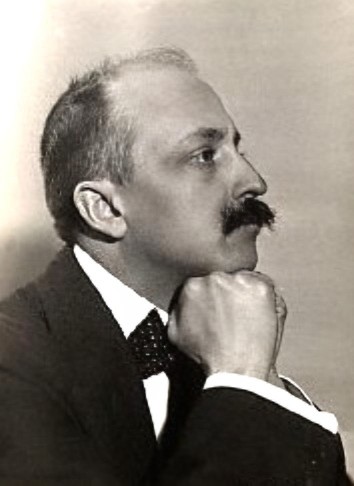
F.T. Marinetti, date unknown
If the machine age baffled and terrified Henry Adams, it was welcomed vigorously by Marinetti, the founder of the Futurist movement, whose manifesto excerpted here is a kind of rock 'n' roll celebration of anarchy, whose buzzwords are danger, courage, daring, revolt, struggle, and whose emblem is the roaring motorcar controlled (barely) by a ruthless daredevil driver who rolls over everything in his path.

Futurism, as its name implies, rejects everything from the past, especially museums and libraries, and wants "to deliver Italy from its gangrene of professors, of archaeologists, of guides, and of antiquarians." Marinetti concedes of museums that "They can be visited once a year as the dead are visited once a year," but that's enough.

Marinetti's Futurism is also a cult of youth, which once again suggests the rock rebels of the 1960s -- "Don't trust anyone over thirty." Marinetti suggets, "When we are forty, let those younger and more valiant than us kindly throw us into the waste basket like useless manuscripts." As for art, it "can be nothing but violence, cruelty and injustice." But the art that the Futurists actually produced hardly strikes us as violent and cruel. The most significant of the Futurist artists was Umberto Boccioni, who responded primarily to the call for art that would demonstrate movement and dynamism:
Umberto Boccioni, Unique Forms of Continuity in Space, 1913
Futurism also had a vogue in Russia before the revolution, as in this work by Natalia Goncharova, again emphasizing the need for speed:
Natalia Goncharova, The Cyclist, 1913

D.H. Lawrence: The Physics of Human Character

One writer you wouldn't expect to respond to Marinetti's manifesto was Lawrence, the worshiper of the great god Pan. But in a letter to his editor, Edward Garnett, in 1914, he speaks of Marinetti approvingly, perhaps because of his anti-intellectualism. Lawrence tells Garnett "that which is physic -- non-human, in humanity, is more interesting to me than the old-fashioned human element." He objects to the "moral scheme" in Turgenev, Tolstoy and Dostoevsky as "dull, old, dead," and proclaims "it is the inhuman will, call it physiology, or like Marinetti -- physiology of matter, that fascinates me."

And so, in a famous statement about characterization in fiction, he announces:
You mustn't look in my novel for the old stable ego -- of the character. There is another ego, according to whose action the individual is unrecognisable, and passes through, as it were, allotropic states which it needs a deeper sense than any we've been used to exercise, to discover are states of the same single radically unchanged element.
Both coal and diamond are allotropes of carbon, he says, "and my theme is carbon." Or, in another metaphor, "the characters fall into the form of some other rhythmic form, as when one draws a fiddle bow across a fine tray delicately sanded, the sand takes lines unknown."


William James: Pluralism, Pragmatism, and Instrumental Truth

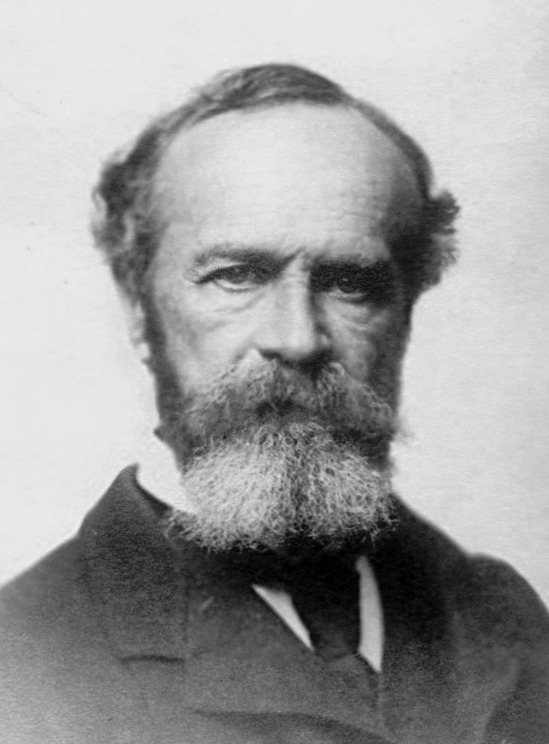
William James in 1906
Giving up on universal truth, James forces us to recognize that the truth is what works. That, at least, is pragmatism in a nutshell, boiling down these excerpts from James's writing in 1907 and 1909. "The pluralistic world," he explains, "is ... more like a federal republic than like an empire or a kingdom."

Pragmatism recognizes that metaphysics is something like a game involving "magic words." Each word "names the universe's principle, and to possess it is after a fashion to possess the universe itself. 'God,' 'Matter,' 'Reason,' 'the Absolute,' 'Energy,' are so many solving names. You can rest when you have them. You are at the end of your metaphysical quest." But pragmatism treats each word "as a program for more work, and more particularly as an indication of the ways in which existing realities may be changed." Pragmatism uses all the various metaphysical theories where appropriate:
It agrees with nominalism, for instance, in always appealing to particulars; with utilitarianism in emphasizing practical aspects; with positivism in its disdain for verbal solutions, useless questions and metaphysical abstractions.
In particular it disdains certitude and dogma: "When the first mathematical, logical, and natural uniformities, the first laws, were discovered, men were so carried away by the clearness, beauty and simplification that resulted, that they believed themselves to have deciphered authentically the eternal thoughts of the Almighty." We now know, however, "that most, perhaps all, of our laws are only approximations.... They are only a man-made language, a conceptual shorthand, as some one calls them, in which we write our reports of nature."

The central premise is: "that ideas ... become true just in so far as they help us to get into satisfactory relation with other parts of our experience.... Any idea upon which we can ride, so to speak." The best approach to changing ways of looking at the world is flexibility: "The most violent revolutions in an individual's beliefs leave most of his old order standing. Time and space, cause and effect, nature and history, and one's own biography remain untouched. New truth is always a go-between, a smoother-over of transitions." (But did "time and space" really remain "untouched" by Einstein's theory of relativity? Just asking.)


John Dewey: Thought as a Natural Event

John Dewey, date unknown
In this excerpt from the 1925 Experience and Nature, Dewey takes on the question of the act of knowing itself: "uncertainty, ambiguity, alternatives, inquiring, search, selection, experimental reshaping of external conditions," and argues that the phenomenon is of equal importance with "the world of objective nature." It is the nature of things themselves that generates "ignorance and inquiry; doubt and hypothesis; trial and temporal conclusions."
The conjunction of problematic and determinate characters in nature renders every existence, as well as every idea and human act, an experiment in fact, even though not in design. To be intelligently experimental is but to be conscious of this intersection of natural conditions so as to profit by it instead of being at its mercy. The Christian idea of this world and this life as a probation is a kind of distorted recognition of the situation; distorted because it applied wholesale to one stretch of existence in contrast with another, regarded as original and final.
Indeterminacy is a characteristic of things, as "moralists and poets" have discovered when they speak of the fact that "mountains, the emblems of constancy, appear and disappear like the clouds." The atom, once thought of as the fundamental building block of matter "is now reported ... to embody a temporary equilibrium in the economy of nature's compromises and adjustment. Every existence is an event."

Dewey rejects the idea that we should be troubled by impermanence and flux:  "It is something to be noted and used.... The eventful character of all existences is no reason for consigning them to the realm of mere appearance any more than it is a reason for idealizing flux into a deity." Instead, we should recognize "the slower and regular rhythmic events [as] structure, and more rapid and irregular ones [as] process." This is to express "the function of one in respect to the other."
A house has a structure; in comparison with the disintegration and collapse that would occur without its presence, this structure is fixed. Yet it is not something external to which the changes involved in building and using the house have to submit. It is rather an arrangement of changing events.... Structure is constancy of means, of things used for consequences, not of things taken by themselves or absolutely.
"Matter" is not something rigid and fixed, and "both mind and matter [are] different characters of natural events, in which matter expresses their sequential order, and mind the order of their meanings in their logical connections and dependencies." If we forbade the use of "mind, matter, consciousness as nouns," we would find that their adverbial and adjectival forms, "conscious and consciously, mental and mentally, material and physically," expressed the reality much better. The world "is not finished and ... has not consistently made up its mind where it is going and what it is going to do."


Werner Heisenberg: Non-Objective Science and Uncertainty

Werner Heisenberg, date unknown
Both James and Dewey were on to something that Heisenberg finally pinned down as the "uncertainty principle," which demonstrated conclusively that the interaction of mind and matter was real and crucial. In this 1955 excerpt from The Physicist's Conception of Nature, Heisenberg pins down what distinguishes modern science from its nineteenth-century predecessor: "In the nineteenth century nature still appeared as a set of laws in space and time in which man and man's intervention in nature could be ignored in principle, if not in practice." The materialists of the nineteenth century assumed that atoms were "the real and immutable substances [whose] arrangement and motion ... create the colourful phenomena of the world of our senses." But the discovery of radioactivity that troubled Henry Adams and vexed his friend Langley revealed that "the atoms of chemistry could no longer be considered as the ultimate indivisible building-stones of matter."

Still, resolving the atom into an assemblage of protons, neutrons, and electrons kept the idea that these were "building-stones" and that they constituted "the ultimate objective reality" alive for a while longer. But then it was discovered that "in the case of the smallest building particles of matter, every process of observation produces a large disturbance."
We can no longer speak of the behaviour of the particle independently of the process of observation. As a final consequence, the natural laws formulated mathematically in quantum theory no longer deal with the elementary particles themselves but with our knowledge of them.
Science "cannot simply speak of nature 'in itself.' Science always presupposes the existence of man and, as [Niels] Bohr has said, we must become conscious of the fact that we are not merely observers but also actors on the stage of life." Because scientific observation has an effect on the thing observed, "The scientific world-view has ceased to be a scientific view in the true sense of the word."

When we speak of causality, we "refer to our belief that events in nature are uniquely determined, or, in other words, that an exact knowledge of nature or some part of it would suffice, at least in principle, to determine the future," and "that there are immutable natural laws that uniquely determine the future state of any system from its present state." But atomic physics no longer accepts the validity of this premise. Max Planck discovered "that a radiating atom does not deliver up its energy continuously, but discreetly in bundles ... the emission of radiation is a statistical phenomenon." Quantum theory put the kibosh on determinism. And then,
It was discovered that it was impossible to describe simultaneously both the position and the velocity of an atomic particle with any prescribed degree of accuracy. We can either measure the position very accurately -- when the action of the instrument used for the observation obscures our knowledge of the velocity, or we can make accurate measurements of the velocity and forgo knowledge of the position.
Moreover, our very conceptions of the atom are mutually exclusive. We can consider it as like a little planetary system with electrons revolving around a central nucleus. Or we can "imagine that the atomic nucleus is surrounded by a system of stationary waves." Or "we can consider the atom chemically" and "calculate its heat of reaction when it becomes fused with other atoms.... Each picture is legitimate when used in the right place, but the different pictures are contradictory." As a result, "the incomplete knowledge of a system must be an essential part of every formulation in quantum theory."