JOURNAL OF A COMPULSIVE READER
By Charles Matthews
Showing posts with label Arnold Bennett. Show all posts

Monday, July 11, 2011

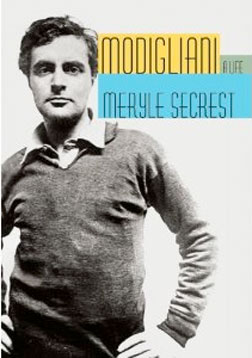
7. Modigliani: A Life, by Meryle Secrest, pp. 251-309

Chapter 12: "Nenette"; Chapter 13: "Life Is a Gift"

The breakup with Beatrice Hastings left Modigliani in some danger: He had collapsed so often that he needed someone to look after him. His affair with Simone Thiroux was short-lasting, but at the end of 1916 he met Jeannette, or Jeanne, Hébuterne, an art student.
Jeanne Hébuterne (Source)

Jeanne's family was from the countryside near Meaux. Her parents had moved to Paris, where her father, Achille, was an executive with a perfume company. Her mother, Eudoxie, was interested in the arts, and had a romantic notion of the lives of artists. Otherwise she might not have given her daughter such a free rein in Montmartre. Jeanne's brother, André, was three years her senior and had begun his own career as an artist. 

In May 1917, Jeanne and Modigliani began their affair. She was nineteen and he was thirty-two, but she had some skills he lacked: She was "able to manage a household, go on errands, and balance the budget, concealing, behind her self-effacing manner, a quiet dependability." She managed to keep their relationship a secret from her parents for a year. "Her mother finally guessed the truth in the spring of 1918 when Jeanne could no longer deny that she was pregnant."

Modigliani had been typically irresponsible in getting her pregnant. "His behavior was the height of recklessness as he went from one woman to another, exposing her to tuberculosis and also unprotected sex, that led all too often to the predictable results." He may have impregnated Maud Abrantes, as well as both Beatrice Hastings and Simone Thiroux; the latter  gave birth to a boy she named Serge, in May 1917. He denied paternity, "even though his friends saw a startling resemblance in the two-year-old Serge."

In July 1917, Modigliani and Jeanne moved into a two-room studio. "There was, of course, no kitchen, bathroom or toilet, running water, or central heat. But given the hovels he had inhabited this third-floor walk-up was almost luxurious." It was made possible in part by a change of art dealers, when Léopold Zborowski replaced Paul Guillaume. Modigliani negotiated a deal with Zborowski that included fifteen francs per day plus materials and models, as well as a studio in Zborowski's own apartment.

Zborowski wanted Modigliani to start painting nudes: "This made the best possible business sense. It was all very well to paint portraits, but if the subjects did not buy them the chances of encountering someone else who would were small.... Nudes were bound to make people stop and look." They are still among the best-known of Modigliani's paintings: In 2010 his Nude Seated on a Sofa sold at Sotheby's in New York for $68.9 million, setting a record for a work by Modigliani sold at auction.
Amedeo Modigliani, Nude Seated on a Sofa, 1917 (Source)
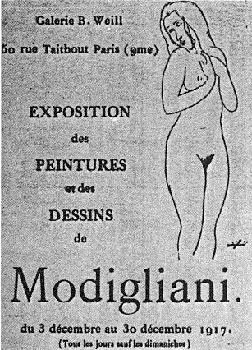
Poster for Modigliani's first one-man show (Source)
Zborowski was right in thinking that Modigliani's nudes would attract attention, and he was effective in making sure they got it. For the artist's first one-man show at the Galerie B. Weill in December 1917, there was a rather provocative poster, for which Jeanne Hébuterne was the model. Berthe Weill, the gallery owner, also placed several nudes in the window. The gallery was across the street from a police station, and the display attracted such crowds that a policeman asked Weill to remove the nudes from the window. When she refused she was hauled into the station, where the chief constable proclaimed the exhibition "an offense against public morals." Weill finally got the policeman to explain what was so offensive about the nudes: They had pubic hair.

The sensation the show caused did not, however, spur sales:  only two drawings were sold, at thirty francs each. Weill, however, bought five paintings, if only to raise Modigliani's morale. He returned for a while to painting portraits, and when he went back to nudes he mostly used the conventional methods of concealment: drapery, or a strategically placed hand. "Five years later one of his forbidden nudes was sold at the Salle Drouout in Paris for twenty-two thousand francs."
Amedeo Modigliani, Nude With Necklace, 1917 (Source)
Zborowski was successful in connecting Modigliani with several collectors, including Jones Netter and Roger Dutilleul. "Between 1918 and 1925, thirty-four of Modigliani's paintings and twenty-one of his drawings went through Dutilleul's hands." Zborowski suggested that Modigliani paint Dutilleul's portrait, but when Modigliani arrived for the sitting, Dutilleul recalled, "As he stood looking at my canvasses by Picasso and Braque, he was agonized. He said, 'I am ten years behind them,' and I had a lot of trouble convincing him this was not so." Dutilleul also recalled that he paid Zborowski five hundred francs for the painting, of which only one hundred went to Modigliani.
Amedeo Modigliani, Portrait of Roger Dutilleul, 1919 (Source)
Meanwhile, Jeanne herself continued to paint, and in recent years her work has sold well. Two of her drawings, one a self-portrait and the other of Modigliani with a pipe, sold at Christie's in Paris in 2009 for more than $17,000.
Jeanne Hébuterne, Self-portrait, date unknown (Source)
Jeanne Hébuterne, Modigliani With a Pipe, date unknown (Source)
In March 1918 a new German offensive, including the shelling of the city by the giant cannon known as Big Bertha, as well as the outbreak of influenza that became a worldwide pandemic, caused many to leave Paris. According to Marco Restellini, it was Jones Netter who paid for Modigliani and Jeanne, among others, to leave the city for Nice and Cannes. They would be gone from Paris for a years. Modigliani's health continued to deteriorate and he came down with the flu that summer. He continued to paint, but not as often, though the quality of his work was high.
Amedeo Modigliani, Portrait of Léopold Zborowski, 1918 (Source)
Amedeo Modigliani, Portrait of Jeanne Hébuterne, 1918 (Source)
Amedeo Modigliani, A Zouave, 1918 (Source)
The military threat to Paris ended, and by November the war was over. Meanwhile, Jeanne was about to give birth to their daughter. It seems that Jeanne and her mother remained in Nice, but it is not clear when Modigliani returned to Paris. The address on the baby's birth certificate is in Nice, and she was born at the end of November. But whether Modigliani was present for the birth is unknown, and the subject of many stories. He was, however, delighted with the child, who was named Jeanne. Her mother wasn't, however, and Modigliani himself took on the task of locating a suitable nurse for the child.

In May 1919, he was back in Paris, leaving Jeanne in Nice, and began working again in preparation for a show in London. In June, Jeanne sent Modigliani a telegram through Zborowski, asking for train fare to Paris. She was pregnant again, and in July Modigliani signed a note promising to marry Jeanne "as soon as the documents arrive" -- which presumably refers to some Italian citizenship papers.

The show in London, at the Mansard Gallery, was to be "the most important exhibition of French art in Lodon in almost a decade." It featured thirty-nine artists, including Dufy, Léger, Matisse, and Picasso, but Modigliani had more works than any of them in the show: fifty-nine pieces. The British critics had discovered him: He was praised by the influential Roger Fry, and the novelist Arnold Bennett, who had written the catalog for the exhibition, said, "I am determined to say that the four figure subjects of Modigliani seem to me to have a suspicious resemblance to masterpieces." Bennett bought a nude and a portrait of Lunia Czechowska, The show had been organized by Osbert and Sacheverell Sitwell, in collaboration with Zborowski, who offered them any picture from the exhibition at a bargain price. They chose one of Modigliani's identified as "Peasant Girl," for which they paid four pounds at a time when the going price for one of his paintings was between thirty and a hundred pounds.

The painting The Little Peasant caught the eye of the sixteen-year-old Kenneth Clark, who had been given a hundred pounds by his parents and told to buy a painting. He paid sixty pounds, but when he got home he realized that he could never hang it among his parents' "gilt-framed Barbizon paintings." So it was sold instead to the artist and collector Hugh Blaker, who eventually sold it to the Tate.
Amedeo Modigliani, The Little Peasant, 1918 (Source)
Modigliani was too ill to travel to London for the exhibition. He had come down with another case of influenza. Paul Guillaume, who owned most of the paintings in the show, told Zborowski to put all sales on hold until Modigliani recovered -- he "knew the prices would double and triple if and when Modigliani died." This time, however, Modigliani didn't cooperate, but the end was only months away.

He thought that it was the influenza that made his health so poor that fall and winter, but it is likely that the tuberculosis had spread to his brain, leading to meningitis, the course of which is described as "going from headaches, general apathy, irritability, fever, and loss of appetite to delirium and coma." He was, however, exhilarated by the praise from London, and continued to work toward the Salon d'Automne, which would take place in November. But his behavior became more erratic, and when Marie Vassilieff met him on the street one day, she recalled, "I couldn't believe the change in him. He had lost his teeth; his hair was flat, straight; he had lost all beauty. 'I'm for it, Marie,' he said,"

One of his last subjects was Paulette Jourdain, a fourteen-year-old live-in maid at Zborowski's. She eventually became Zborowski's mistress and gave birth to his child, which Zborowski and his companion, Hanka, raised as their own. Paulette later became an art dealer, and collected Modigliani memorabilia.
Amedeo Modigliani, Portrait of Paulette Jourdain, 1919 (Source)
Another of his last models was Thora Klincköwstrom, a Swedish girl who came to Paris to study sculpture. On one of the sketches he made of her, he wrote a quotation from d'Annunzio:
La Vita e un Dono; 
dai pochi ai molti: 
di Coloro che Sanno e che hanno 
a Coloro che non Sanno e non hanno.
Life is a gift from the few to the many, from those who know and have to those who don't know and don't have.
She recalled that while she posed for him, Modigliani coughed a lot and would occasionally stop for a drink of rum. Jeanne Hébuterne entered once during the sitting, and "Modigliani explained that Jeanne was expecting their second child and that their baby was staying with a nurse in the countryside outside Orléans."
Amedeo Modigliani, Portrait of Thora Klincköwstrom, 1919 (Source)
Although Modigliani told Thora that baby Jeanne was in Orléans, she seems to have been in the care of Lunia Czechowska for much of the time they were in Paris. Jeanne Hébuterne visited her daughter once a week. Sometime that fall Lunia decided to move to the south of France, and there are suggestions that Modigliani wanted to go with her. But Jeanne's pregnancy made her reluctant to travel or to be left alone in Paris. Marc Restellini thinks that there was much tension between Jeanne and Modigliani in the last months, and that he wanted the motherly attention that Lunia gave him. The late paintings of Jeanne are also unflattering.
Amedeo Modigliani, Portrait of Jeanne Hébuterne With Her Left Arm Behind Her Head, 1919 (Source)
He also did only the second self-portrait that we know of:
His expression is indecipherable -- the art historian Sara Harrison likened it to a mask -- and his eyes are narrowed, their sockets blanked out with gray. The autumnal colors of fawns, ochres, and reddish browns, the grayish-blue scarf tied around his neck, provide the elegiac proof, if such were needed, that Modigliani knew how little time was left.
Amedeo Modigliani, Self-portrait, 1919 (Source)
Kenneth Silver notes that it is in the tilt of the head "that we strongly sense Modigliani's predilection for the Italian Renaissance and especially for the art of Botticelli, for whom the tilted head is a sign of spiritual buoyancy .... Italianate too ... are both the attenuated linear style and the idealization of the form, which is at the crux of Modigliani's art."
Sandro Botticelli, Primavera, 1478 (Source)
Amedeo Modigliani, 1919 (Source)
The last known photograph of Modigliani, taken in 191, shows eyes full of a painful awareness.... The received wisdom was that he drank himself to death. The reverse is the case; alcohol and drugs were the means by which he could somehow keep functioning, the necessary anesthetic, as well as hide the great secret that must be kept at all costs. 
It is possible, Secrest says, that the secret of Modigliani's tuberculosis did get out in the final days, and that it provides "the most plausible explanation for what happened when he was dying and for days left alone." But even then, when a doctor was sent for, his illness was misdiagnosed as a kidney infection. Only when he lapsed into a coma was he finally taken to a hospital, where he died on January 24, 1920. He left an unfinished portrait on his easel, of the Greek composer Mario Varvogli, with whom he had gone out drinking on New Year's Eve.
Amedeo Modigliani, Portrait of Mario Varvogli, 1919 (Source)
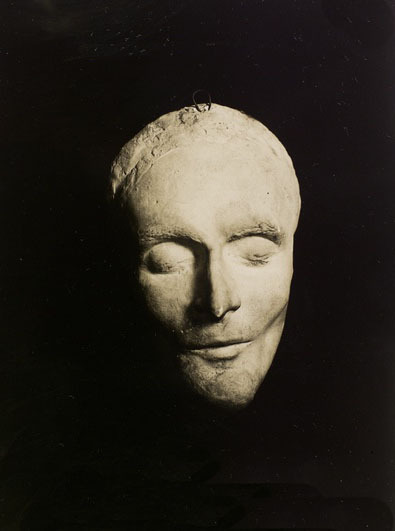
Modigliani's death mask (Source)
A death mask was taken, though it was somewhat botched because the plaster was not allowed to set long enough; Jacques Lipchitz was called in to restore it and make bronze castings. The sunken cheeks suggest both the emaciation and the loss of teeth that he suffered in the final year.

When the family was contacted, Emanuele sent word to spare no expense in the funeral, and that he would cover the expenses. The decision was made to bury Modigliani in Père Lachaise, the cemetery known for the famous artists who are interred there. The funeral procession attracted a crowd. "It is said that, as the numbers grew, speculators in art ran up and down the ranks, offering to buy for thousands of francs what no one would pay fifty for while he was alive."

Saturday, April 30, 2011

15. The Modern Tradition, edited by Richard Ellmann and Charles Feidelson Jr., pp. 309-328

Realism: Melioristic Realism (F.M. Dostoevsky, George Sand and Gustave Flaubert, H.G. Wells and Henry James)
_____

F.M. Dostoevsky: Prophetic Realism

In his letters, Dostoevsky explained that his novel The Idiot was an attempt to represent "a truly perfect and noble man," a task he didn't underestimate: "All writers ... who have sought to represent Absolute Beauty, where unequal to the task, for it is an infinitely difficult one." Like Tolstoy, he bases his ideas about the novel in Christianity, but only insofar as the image of Christ -- the "one figure of absolute beauty" -- gives him an ideal to strive for.
Vasily Perov, Portrait of F.M. Dostoevsky, 1872

Dostoevsky's choice of the noblest figures in Christian literature are comic ones: Don Quixote and the members of Dickens's Pickwick club. "The reader feels sympathy and compassion with the Beautiful, derided and unconscious of its own worth. The secret of humour consists precisely in this art of wakening the reader's sympathy."

Dostoevsky's realism was of a different order from Zola's: 
I have my own idea about art, and it is this: What most people regard as fantastic and lacking in universality, I hold to be the inmost essence of truth. Arid observation of everyday trivialities I have long ceased to regard as realism -- it is quite the reverse. In any newspaper one takes up, one comes across reports of wholly authentic facts, which nevertheless strike one as extraordinary. Our writers regard them as fantastic, and take no account of them; and yet they are the truth, for they are facts.
He proposed to concentrate on the spiritual development in Russia, even though "all the realists would shriek that it was pure fantasy! ... It is the one true, deep realism; theirs is altogether too superficial."


George Sand and Gustave Flaubert: The Counter-Religions of Humanity and Art

George Sand in 1864
In their correspondence in the mid-1870s, Sand seems determined to cheer Flaubert up: "You love literature too much; it will destroy you and you will not destroy the imbecility of the human race." Though they both agreed that humanity was messed up, she viewed it, she says, "with maternal eyes: for it is a childhood and all childhood is sacred. What hatred you have devoted to it! what warfare you wage on it!"

She urges him to remember that "there is something above art: namely, wisdom, of which art at its apogee is only the expression." She insists on optimism: "to perceive the continual gravitation of all tangible and intangible things towards the necessity of the decent, the good, the true, the beautiful." She admits that "the general aspect is for the moment poor and ugly," but refuses to let go of her expectations for improvement. And she wants him to recognize that he is "about to enter gradually upon the happiest and most favorable time of life: old age. It is then that art reveals itself in its sweetness; as long as one is young, it manifests itself with anguish."

She advises him to make the aim of his books clearer:
L'Éducation sentimentale has been a misunderstood book ... because people did not understand that you wanted precisely to depict a deplorable state of society that encourages these bad instincts and ruins noble efforts; when people do not understand us it is always our fault. What the reader wants, first of all, is to penetrate into our thought, and that is what you deny him, arrogantly.... You say that it ought to be like that, and that M. Flaubert will violate the rules of good taste if he shows his thought and the aim of his literary enterprise.
She expresses disbelief in his claim that he "writes for twenty intelligent people and does not care a fig for the rest. It is not true, since the lack of success irritates you and troubles you." She asserts a more sensible version of Tolstoy's view of art: "Whatever you do, your tale is a conversation between you and the reader." By hiding himself from the reader, by insisting on the autonomy of the work, he misses this essential connection. "Keep your cult for form; but pay more attention to the substance. Do not take true virtue for a commonplace in literature. Give it its representative, make honest and strong men pass among the fools and the imbeciles that you love to ridicule.... in short, abandon the convention of the realist and return to the true reality, which is a mingling of the beautiful and the ugly, the dull and the brilliant."

Flaubert calls her advice "affectionate and motherly," which he presumably meant kindly but which sounds condescending. But he rejects her advice with an insistence that he can do no other: "I write according to the dictates of my heart. The rest is beyond my control." And he continues to insist that art should conceal the artist:
I burst with suppressed anger and indignation. But my ideal of Art demands that the artist show none of this, and that he appear in his work no more than God in nature. The man is nothing, the work is everything!
Nor does he intend to compromise on his view of human nature: "No monsters, no heroes!" As for style, it remains a primary concern: "Goncourt is very happy when he has picked up in the street some word that he can stick into a book; I am very satisfied when I have written a page without assonances or repetitions.... I try to think well in order to write well. But my aim is to write well -- I have never said it was anything else."


H.G. Wells and Henry James: The Counter-Claims of Content and Form

H.G. Wells, date unknown
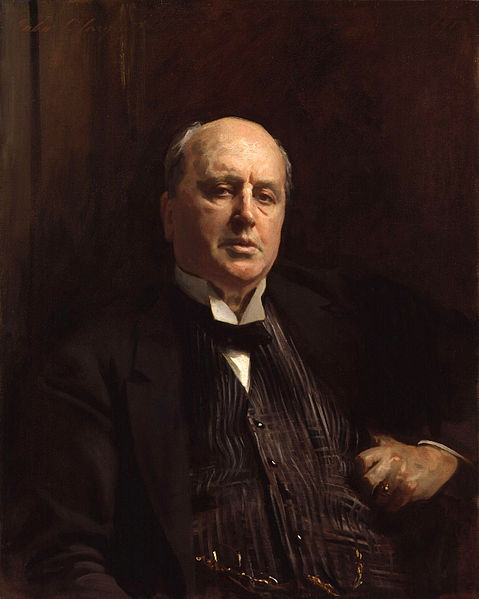
John Singer Sargent, Portrait of Henry James, 1913
Virginia Woolf was not the only writer to have problems with the fiction of H.G. Wells and Arnold Bennett. In an article, "The Younger Generation," in the Times Literary Supplement in 1914, James trained his exquisite sensibilities on both writers and found them somewhat wanting. Bennett and Wells, he wrote "squeeze out to the utmost the plump and more or less juicy orange of a particular acquainted state and let this affirmation of energy, however directed or undirected, constitute for them the 'treatment' of the theme." They mass details for us, as Bennett does in his novel Clayhanger, recording "in dense unconfused array, every fact required to make the life of the Five Towns press upon us and make our sense of it, so full fed, content us." But then it occurs to the reader (or at least to James) to ask: "Yes, yes; but is this all?" We see the details, but not why they're being presented to us: "where is the interest itself, where and what is its centre and how are we to measure it in relation to that?"

He takes Tolstoy "as the great illustrative master-hand on all this ground of disconnexion of method from matter." His "epic genius," however, makes him a bad model: "from no other projector of the human image and the human idea is so much truth to be extracted under an equal leakage of its value." James sees Bennett and Wells as deriving, "by multiplied if diluted transmissions, from the great Russian." Descriptive detail in Bennett's novels gives the reader such a sense of "the solidity of every appearance that it may be said to represent our whole relation to the work and completely to exhaust or reaction upon it."

In Wells's case, he "affects us as taking all knowledge for his province and as inspiring in us to the very highest degree the confidence enjoyed by himself.... The more he knows and knows, or at any rate learns and learns -- the more, in other words, he establishes his saturation -- the greater is our impression of his holding it good enough for us, such as we are, that he shall but turn out his mind and its contents upon us by any free familiar gesture and as from a high window forever open." His books are a kind of brain dump. But James finds him a careless artist, who gives us only the outlines of the experience of his characters.

In Wells's 1934 Experiment in Autobiography, he recalled his acquaintance with James, who "liked me and ... found my work respectable enough to be greatly distressed about it." Where they most disagreed, he says, was that James "had no idea of the possible use of the novel as a help to conduct." James, Wells says, believed in "The Novel ... as an Art Form and ... novelists as artists of a very special and exalted type.... I was disposed to regard a novel as about as much an art form as a market place our a boulevard. It had not even necessarily to get anywhere. You went by it on your various occasions."

James had focused on Wells's novel Marriage in his TLS article, and criticized it because the characters seemed to talk to the reader more than they did to each other. Wells responds,
If the Novel was properly a presentation of real people as real people, in absolutely natural reaction in a story, then my characters were not simply sketchy, they were eked out by wires and pads of non-living matter and they stood condemned.... And the only point upon which I might have argued ... was this, that the Novel was not necessarily, as he assumed, this real through and through and absolutely true treatment of people more living than life. It might be more and less than that and still be a novel.... The important point ... was that the novel of completely consistent characterization arranged beautifully in a story and painted deep and round and solid, no more exhausts the possibilities of the novel, than the art of Velazquez exhausts the possibilities of the painted picture. 
Wells concludes by questioning whether "The Novel, a great and stately addendum to reality," has ever "been realized -- or can it ever been realized?"

But this autobiographical retort, some twenty years later, was not Wells's first response to James's critique. In 1915, he published a satire called Boon, in which the characters discuss James's fiction.
"He wants a novel to be simply and completely done. He wants it to have a unity, he demands homogeneity.... Why should a book have that? For a picture it's reasonable, because you have to see it all at once. But there's no need to see a book all at once. It's like wanting to have a whole country done in one style and period of architecture." 
One character suggests that James should "have gone into philosophy and been greater even than his wonderful brother," and argues that "if the novel is to follow life it must be various and discursive. Life is diversity and entertainment, not completeness and satisfaction." James's characters have no "opinions," in them there are "no people with defined political opinions, no people with religious opinions, none with clear partisanships or with lusts or whims, none definitely up to any specifically impersonal thing.... James's denatured people are only the equivalent in fiction of those egg-faced, black-haired ladies, who sit and sit, in the Japanese colour-prints, the unresisting stuff for an arrangement of blacks."

And then comes the often-quoted simile, likening a James novel to "a church lit but without a congregation to distract you, with every light and line focused on the high altar. And on the altar, very reverently placed, intensely there, is a dead kitten, an egg-shell, a bit of string." And the effect of the novel is that of a hippopotamus trying to pick up a pea.

James was not happy with what he called "the bad manners of Boon," and wrote to Wells arguing that "the extension of life ... is the novel's best gift," and asserting, "It is art that makes life, makes interest, makes importance, ... and I know of no substitute for the force and beauty of its process." But it was posterity who gave James the last word, keeping his novels alive while James's, except for the science fiction, are forgotten. 

Friday, April 22, 2011

7. The Modern Tradition, edited by Richard Ellmann and Charles Feidelson Jr., pp. 121-142

Symbolism: The Autonomy of Art; The Purification of Fiction (Virginia Woolf, Gustave Flaubert, André Gide. The Objective Artifact (Gustave Flaubert, Rainer Maria Rilke, James Joyce)
_____

Virginia Woolf: The Novel of Consciousness

In the essay "Modern Fiction" (1919), Woolf takes on the most celebrated novelists of the Edwardian era, H.G. Wells, Arnold Bennett, and John Galsworthy, and leaves them in tatters. None of them seems to have recovered from the attack: Wells is known today mostly for his science fiction and Galsworthy for the TV adaptation of The Forsyte Saga (and for a Nobel Prize in Literature, an award that eluded such figures as Proust, Joyce, Tolstoy and Henry James, not to mention Virginia Woolf). Bennett, after a long period of neglect, has received some serious consideration in recent years, including a biography by Margaret Drabble, but of the three he remains probably the least-known by the general reading public.
Virginia Woolf, date unknown

Woolf's criticism comes after one of those assertions modern artists were fond of making: "It is doubtful whether in the course of the centuries, though we have learnt much about making machines, we have learnt anything about making literature." And Wells, Galsworthy, and Bennett are her proof, because the three celebrated writers "are materialists. It is because they are concerned not with the spirit but with the body that they have disappointed us, and left us with the feeling that the sooner English fiction turns its back upon them ... the better for its soul."

She singles out Bennett for the kind of faint praise that damns: "he is by far the best workman" of the three. "He can make a book so well constructed and solid in its craftsmanship that it is difficult for the most exacting of critics to see through what chink or crevice decay can creep in. There is not so much a draught between the frames of the windows, or a chink in the boards. And yet -- if life should refuse to live there?"

It may be that today we value craftsmanship more than the innovative writers of Woolf's day did, but for her, to call a writer a "workman" and to praise his craftsmanship was to say that he wasn't an artist. Bennett, Galsworthy and Wells, she proclaims, "write of unimportant things" and "spend immense skill and immense industry making the trivial and the transitory appear the true and the enduring." We have seen writers and elsewhere in this book suggesting that an ability to find the "enduring" in the "transitory" is exactly what the artist should possess, but Woolf doesn't think that's enough -- at least for fiction. Bennett, she suggests, has caught "life just an inch or two on the wrong side." This choosing of right and wrong sides is rather impressionistic and vague, but she goes on to elaborate in a famous passage that bears repeating almost in full:
Examine for a moment an ordinary mind on an ordinary day. The mind receives a myriad impressions -- trivial, fantastic, evanescent, or engraved with the sharpness of steel. From all sides they come, an incessant shower of innumerable atoms; and as they fall, as they shape themselves into the life of Monday or Tuesday, the accent falls differently from of old; the moment of importance came not here but there; so that, if a writer were a free man and not a slave, if he could write what he chose, not what he must, if he could base his work upon his own feeling and not upon convention, there would be no plot, no comedy, no tragedy, no love interest or catastrophe in the accepted style, and perhaps not a single button sewn on as the Bond Street tailors would have it.
That's such a barrage of ideas and images that, even though we're only at the midpoint of this celebrated paragraph, it's probably a good idea to stop and parse a bit of what she's saying. The emphasis here is on the freedom of the artist from convention, from the traditional way of reporting what occurs to "an ordinary mind on an ordinary day." Convention demands that the writer impose a plot on it, choose whether to regard it as comic or tragic, to dress it up neatly "in the accepted style." She continues:
Life is not a series of gig lamps symmetrically arranged; life is a luminous halo, a semi-transparent envelope surrounding us from the beginning of consciousness to the end. Is it not the task of the novelist to convey this varying, this unknown and uncircumscribed spirit, whatever aberration or complexity it may display, with as little mixture of the alien and external as possible? We are not pleading merely for courage and sincerity; we are suggesting that the proper stuff of fiction is a little other than custom would have us belief it.
Gig lamps
"Gig lamps" are carriage lamps, and we can think of them as headlights. But because they were "symmetrically arranged" on either side of the carriage the phrase also became slang for eyeglasses. So Woolf is thinking of lights or spectacles peering through the dark, and singling out objects in the viewer's path. But this is to circumscribe existence, and Woolf prefers to see life, or existence, or experience as something that surrounds one and is spiritual -- intangible, ineffable -- rather than the materialistic singling out of objects in one's path.
Let us record the atoms as they fall upon the mind in the order in which they fall, let us trace the pattern, however disconnected and incoherent in appearance, which each sight or incident scores upon the consciousness. Let us not take it for granted that life exists more fully in what is commonly thought big than in what is commonly thought small. 
But wait: Didn't she just criticize Bennett for his emphasis on the "trivial and transitory"?  Yes, she did. But what she said was that he made "the trivial and the transitory appear the true and the enduring." (Italics added.) I think the point is that Bennett overemphasizes things, sentimentalizes them, claims for them a significance that they don't really possess. He doesn't "trace the pattern ... upon the consciousness." He gives individual sights and incidents connection and coherence. He imposes an order rather than discovers it.

And so to James Joyce, who had published The Portrait of the Artist as a Young Man and was beginning to serialize Ulysses, which Woolf thinks "promises to be a far more interesting work." He comes closer to what Woolf hopes fiction will accomplish:
In contrast with those whom we have called materialists, Mr. Joyce is spiritual; he is concerned at all costs to reveal the flickerings of that innermost flame which flashes its messages through the brain, and in order to preserve it he disregards with complete courage whatever seems to him adventitious, whether it be probability, or coherence, or any other of these signposts which for generations have served to support the imagination of a reader when called upon to imagine what he can neither touch nor see.
She has read the cemetery chapter from Ulysses, and comments, "If we want life itself, here surely we have it." But does Joyce measure up to Conrad or Hardy? No, "because of the comparative poverty of the writer's mind" which gives her the "sense of being in a bright yet narrow room, confined and shut in, rather than enlarged and set free." She's also a little shocked by Joyce: "Does the emphasis laid, perhaps didactically, upon indecency, contribute to the effect of something angular and isolated?"

The comparative merits and faults of James Joyce and Virginia Woolf are not up for debate here, so I'll just say that Woolf's reading of Joyce seems to me to have elements of envy tainting it, as well as a theoretical bias. Woolf would go on to try to trace the patterns and evoke the semi-transparent envelope in her own novels, and if Mrs. Dalloway and To the Lighthouse have faults, it may be that they are too theoretical at basis.

She turns away from Joyce to consider the Russians: "If we want understanding of the soul and heart where else shall we find it of comparable profundity. If we are sick of our own materialism the least considerable of their novelists has by right of birth a natural reverence for the human spirit." The problem with Russian writers, however, is "the inconclusiveness of the Russian mind" and "the sense that there is no answer" to the questions life raises," which "fills us with a deep, and finally it may be with a resentful, despair." One of the virtues of the English novel is its capacity for humor: "English fiction from Sterne to Meredith bears witness to our natural delight in humour and comedy, in the beauty of earth, in the activities of the intellect, and in the splendour of the body."


Gustave Flaubert: Style as Absolute

Edmond and Jules Goncourt recorded in their journal in 1861 that Flaubert claimed to be unconcerned with plot and character: "In Madame Bovary, all I wanted to do was to render a grey color, the mouldy color of a wood-louse's existence." His initial concept of Madame Bovary was "a chaste and devout old maid," and he didn't change his mind until he started writing.

However much we may suspect that Flaubert was pulling the Goncourts' legs, he also claimed, in an 1852 letter to Louise Colet, who is often thought to be the model for Emma Bovary, that he wanted to write "a book about nothing, a book dependent on nothing external, which would be held together by the strength of its style, just as the earth, suspended in the void, depends on nothing external for its support; a book which would have almost no subject, or at least in which the subject would be almost invisible, if such a thing is possible.... I believe that the future of Art lies in this direction." (Perhaps he was only viewing the future of the sitcom: "Seinfeld," the show about nothing.)
It is for this reason that there are no noble subjects or ignoble subjects; from the standpoint of pure Art one might almost establish the axiom that there is no such thing as subject, style in itself being an absolute manner of seeing things.


André Gide: The Pure Novel 

André Gide, date unknown
Flaubert never pulled off his novel about nothing, but the idea was still lingering in 1925 when Gide published The Counterfeiters. In the journal about its composition, published a year later, Gide proclaimed:
I should like to strip the novel of every element that does not specifically belong to the novel. Just as photography in the past freed painting from its concern for a certain sort of accuracy, so the phonograph will eventually no doubt rid the novel of the kind of dialogue which is drawn from the life and which realists take so much pride in. Outward events, accidents, traumatisms, belong to the cinema. The novel should leave them to it. 
(Movies, of course, were then silent, so Gide gave the phonograph the task of removing dialogue from the novel. A few years later, the cinema would serve the purpose as well.) The point, as we have seen poets and painters also insist, was the "purity" of the work: "purity is the only thing I care about," Gide proclaims.

In the novel, Edouard is the novelist trying to liberate the genre from alien elements, and his ideas meet with derision from his friends. He wants the novel to exhibit a "deliberate avoidance of life," to be as artificial as "the works of the Greek dramatists, for instance, or ... the tragedies of the French XVIIth century" which "don't pride themselves on appearing ... real." He tells them, "I should like a novel which should be at the same time as true and as far from reality, as particular and at the same time as general, as human and as fictitious as Athalie, or Tartuffe or Cinna." (Plays by, respectively, Racine, Molière, and Corneille.) The central character of the novel would be the novelist struggling "between what reality offers him and what he himself desires to make of it." And he proposes to keep a notebook, "a running criticism of my novel" that would be "more interesting than the work itself." 

When one of his friends asks if he isn't afraid of  "making a novel about ideas instead of about human beings," Edouard retorts that "ideas, I must confess, interest me more than men -- interest me more than anything." And he isn't afraid of writing a novel of ideas just because others have tried and made a botch of it. He's even thinking of trying to write a novel that would be like a fugue: "I can't see why what was possible in music should be impossible in literature." Bernard, who knows the title of Edouard's book, says that the title itself seemed to promise a novel with a story: The Counterfeiters.


Gustave Flaubert: The Impersonality of Art

In another 1857 letter to Marie-Sophie Leroyer de Chantepie, Flaubert announces that he is "going to write a novel whose action will take place three centuries before Christ" -- it became Salammbô -- because "I feel the need of taking leave of the modern world: my pen has been steeped in it too long, and I am as weary of portraying it as I am disgusted by the sight of it." He also denies that Madame Bovary is based on any actual incident or in any way on his own life:
The illusion of truth (if there is one) comes ... from the book's impersonality. It is one of my principles that a writer should not be his own theme. An artist must be in his work like God in creation, invisible and all-powerful; he should be everywhere felt, but nowhere seen.
He also argues that art should be endowed "with the exactness of the physical sciences." The naturalism of Zola would follow this principle to the letter. The goal of the scientist is the impersonal approach to the truth, but in art, he admits, impersonality is a hard thing to maintain: "Feeling does not make poetry; and the more personal you are, the poorer you will be. That has always been my sin; I have always put myself into everything I have done.... The less one feels a thing, the more fit one is to express it in its true nature.... But one must have the faculty for making oneself feel."


Rainer Maria Rilke: Artistic Objectivity

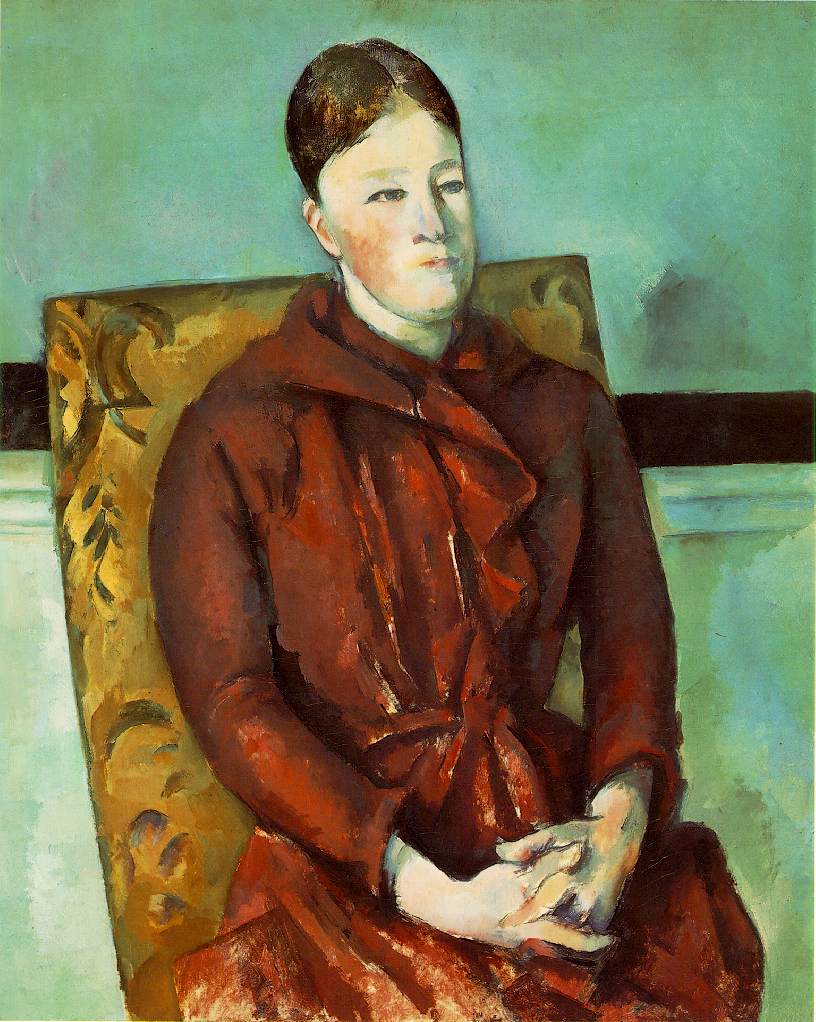
Rilke writes in 1907 to his wife, the sculptor Clara Westhoff, about his favorite painter, Paul Cézanne, whose "integrity reduced the existent to its color content that it began, beyond color, a new existence, without earlier memories." While this treatment of color was accepted in his still lifes, some viewers found it harder to accept in landscapes or portraits.
They apprehend, without realizing, that he was reproducing apples, onions, and oranges with sheer color ... , but when they come to landscape, they miss interpretation, judgment, superiority, and where portraiture is concerned, why, the rumor of intellectual conception has been passed on even to the most bourgeois, and so successfully that something of the kind is already noticeable even in Sunday photographs of engaged couples and families. And here Cézanne seems to them quite inadequate and not worth discussing at all.
Paul Cézanne, Apples, peaches, pears, and grapes, c. 1870
Paul Cézanne, Mont Sainte-Victoire, c. 1902-05
Paul Cézanne, Madame Cézanne in a Yellow Chair, c. 1888-90


T.S. Eliot: The Objective Correlative

Eliot's 1919 essay on Hamlet is probably his most famous, not only for the somewhat maddening concept of the "objective correlative," but also because Shakespeare's play was at the time venerated as the pinnacle of the playwright's art, and Eliot's cheeky judgment that it was a failure shocked many of the conventional-minded.

The objective correlative is "a set of objects, a situation, a chain of events which shall be the formula of that particular emotion; such that when the external facts, which must terminate in sensory experience, are given, the emotion is immediately evoked." Hamlet's emotion, Eliot claims, "is in excess of the facts as they appear." He seems, to Eliot at least, to be overreacting to his father's death, his uncle's role in it, and his mother's infidelity. "Hamlet is up against the difficulty that his disgust is occasioned by his mother, but that his mother is not an adequate equivalent for it; his disgust envelops and exceeds her."

It's a tricky claim, because it treats the play as a text to be read and not as one to be acted. Who's to say that skillful performers and directors can't provide in the performance the detail and nuance that would make Hamlet's emotion convincing? And to some of us, the very eccentricity of Hamlet is what's so eternally fascinating about the play.


James Joyce: Stasis and Objective Form

James Joyce, 1915
Stephen Hero (1904-06) is the abandoned first draft of A Portrait of the Artist as a Young Man (1916). It gives us Joyce's first concise definition of an epiphany as "a sudden spiritual manifestation, whether in the vulgarity of speech or of gesture or in a memorable phase of the mind itself" and as "the gropings of a spiritual eye which seeks to adjust its vision to an exact form. The moment the focus is reached the object is epiphanised."

In the Portrait, Stephen Dedalus lays out his aesthetic for his coarse friend Lynch during a walk through Dublin, mixing Aristotle with Aquinas in a superbly callow but brilliant fashion. He begins with a parsing of Aristotle's "pity and terror," the elements of tragedy:
--Pity is the feeling which arrests the mind in the presence of whatsoever is grave and constant in human sufferings and unites it with the human sufferer. Terror is the feeling which arrests the mind in the presence of whatsoever is grave and constant in human sufferings and unites it with the secret cause.
Pity, in Stephen's terms, is virtually synonymous with empathy. Terror is harder to define, but it seems to denote a kind of identification of the viewer with the tragic victim. The key word for Stephen, though, is arrest, a momentary halt in the flux of existence: "the tragic emotion is static." True art produces this stasis, this epiphanic moment of suspension in time, whereas "improper art" urges one to do something, it is kinetic. Pornography stirs desire, and is therefore not true art. Lynch, of course, makes a joke out of this, but Stephen soldiers on:
Beauty expressed by the artist cannot awaken in us an emotion which is kinetic or a sensation which is purely physical. It awakens, or ought to awaken, or induces, or ought to induce, an esthetic stasis, an ideal pity or an ideal terror, a stasis called forth, prolonged and at last dissolved by what I call the rhythm of beauty... the first formal esthetic relation of part to part in any esthetic whole or of an esthetic whole to its part or parts or of any part to the esthetic whole of which is its a part.
Yeats remarked on the role of rhythm as a form of hypnosis, similarly leading to a kind of stasis.

Stephen then ventures into Scholasticism and Aquinas to examine the nature of beauty, whose elements, as defined by Aquinas are "wholeness, harmony, and radiance." And he examines some aesthetic conundrums, including:
--If a man hacking in fury at a block of wood ... make there an image of a cow, is that image a work of art? If not, why not?
He doesn't stay for an answer, however, but proceeds to the familiar withdrawal of the artist from the work he has created: "The personality of the artist, at first a cry or a cadence or a mood and then a fluid and lambent narrative, finally refines itself out of existence, so to speak.... The artist, like the God of the creation, remains within or behind or beyond or above his handiwork, invisible, refined out of existence, indifferent, paring his fingernails." We are back to Flaubert's assertion: "An artist must be in his work like God in creation, invisible and all-powerful; he should be everywhere felt, but nowhere seen."